The idea in everyday language
Work takes energy. Work can also give it back.
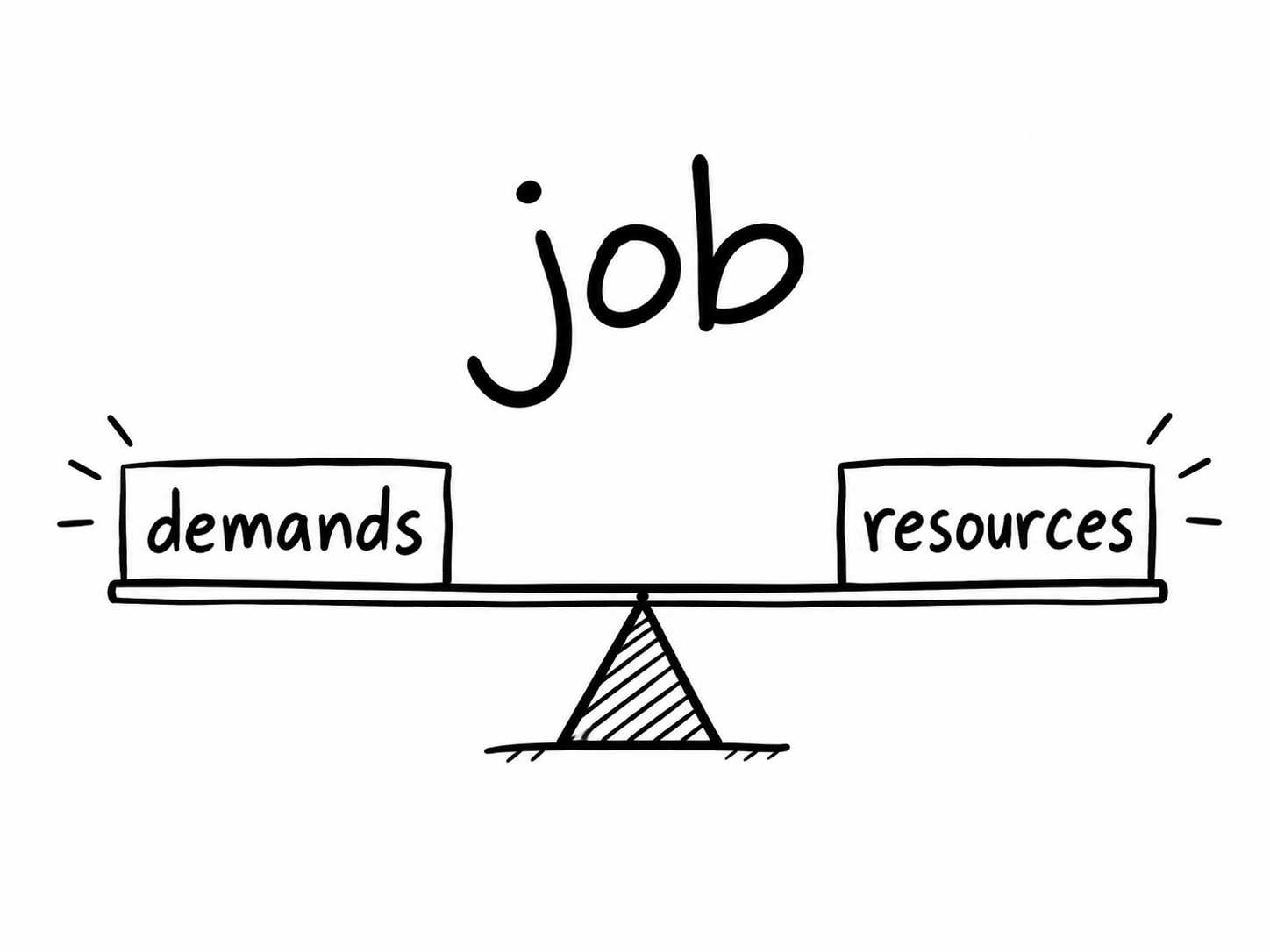
The Job Demands-Resources model sorts work conditions into two broad groups. Demands are things that take effort: deadlines, emotionally difficult conversations, or conflicting responsibilities. Resources help people meet those demands: support from colleagues, control over how work gets done, and feedback that helps them improve. The model was developed by Bakker and Demerouti and later explained for workplace practice by Schaufeli. [1, 2]
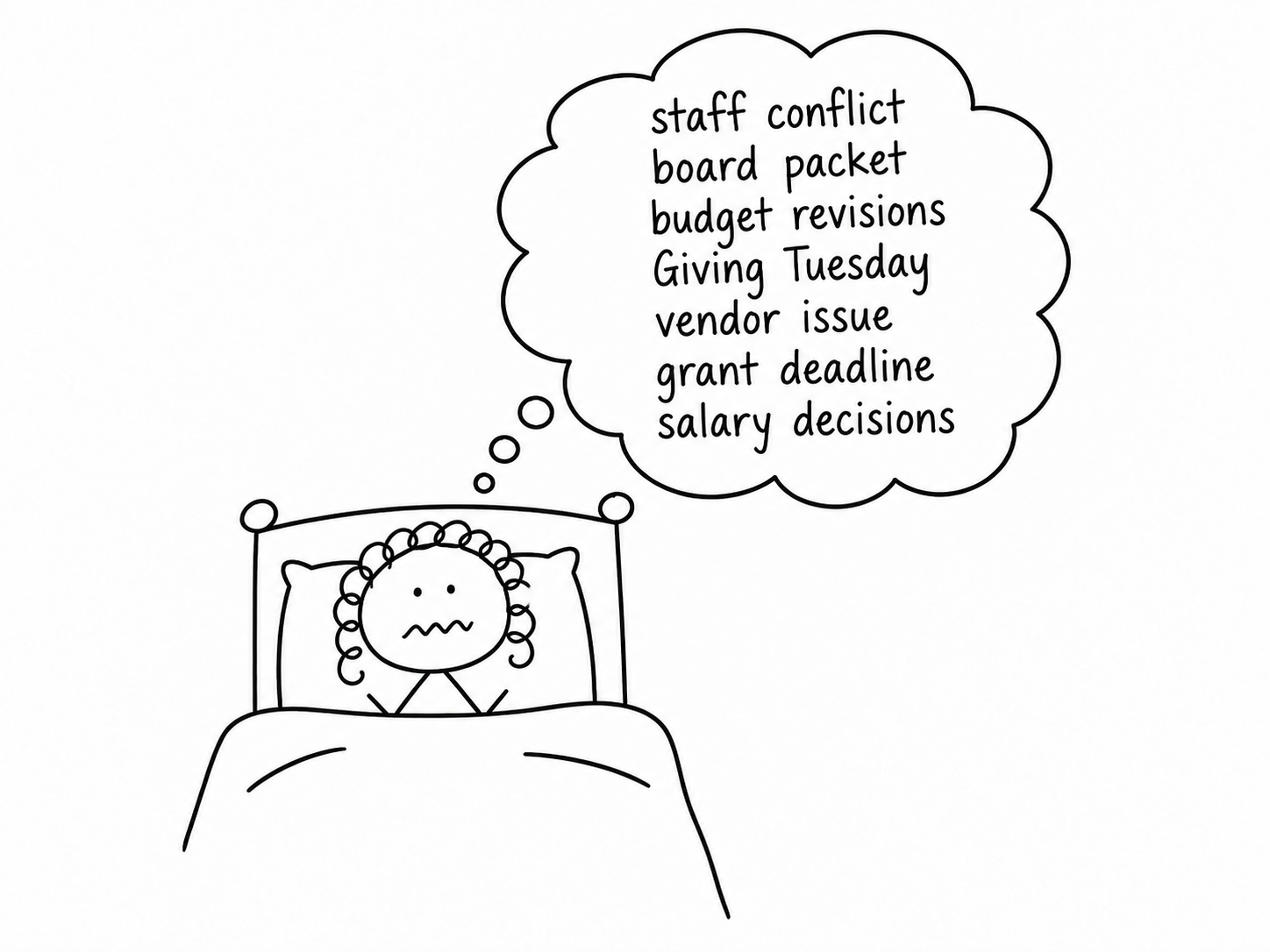
Examples of job demands at a nonprofit job
Two paths, not one switch
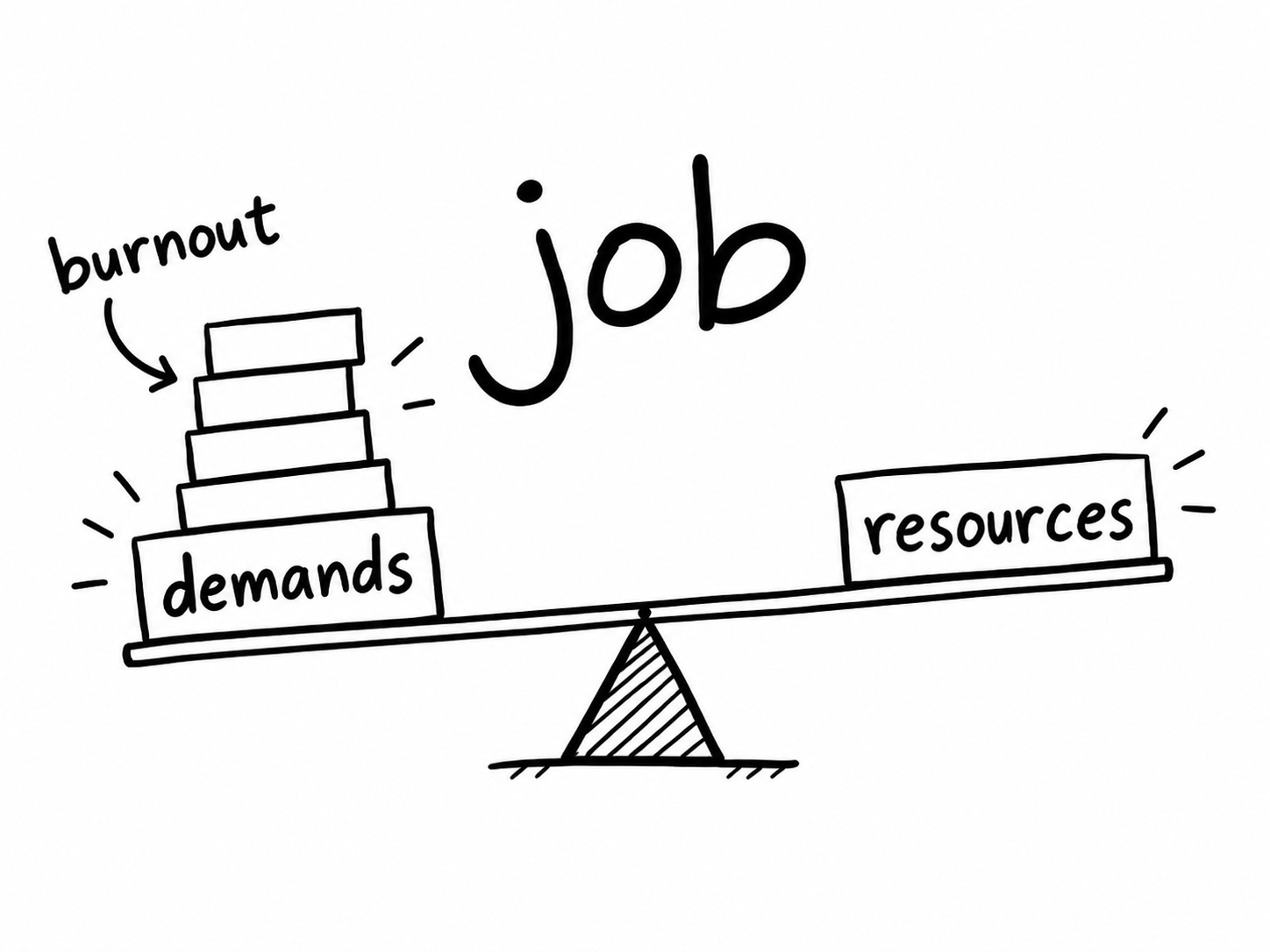
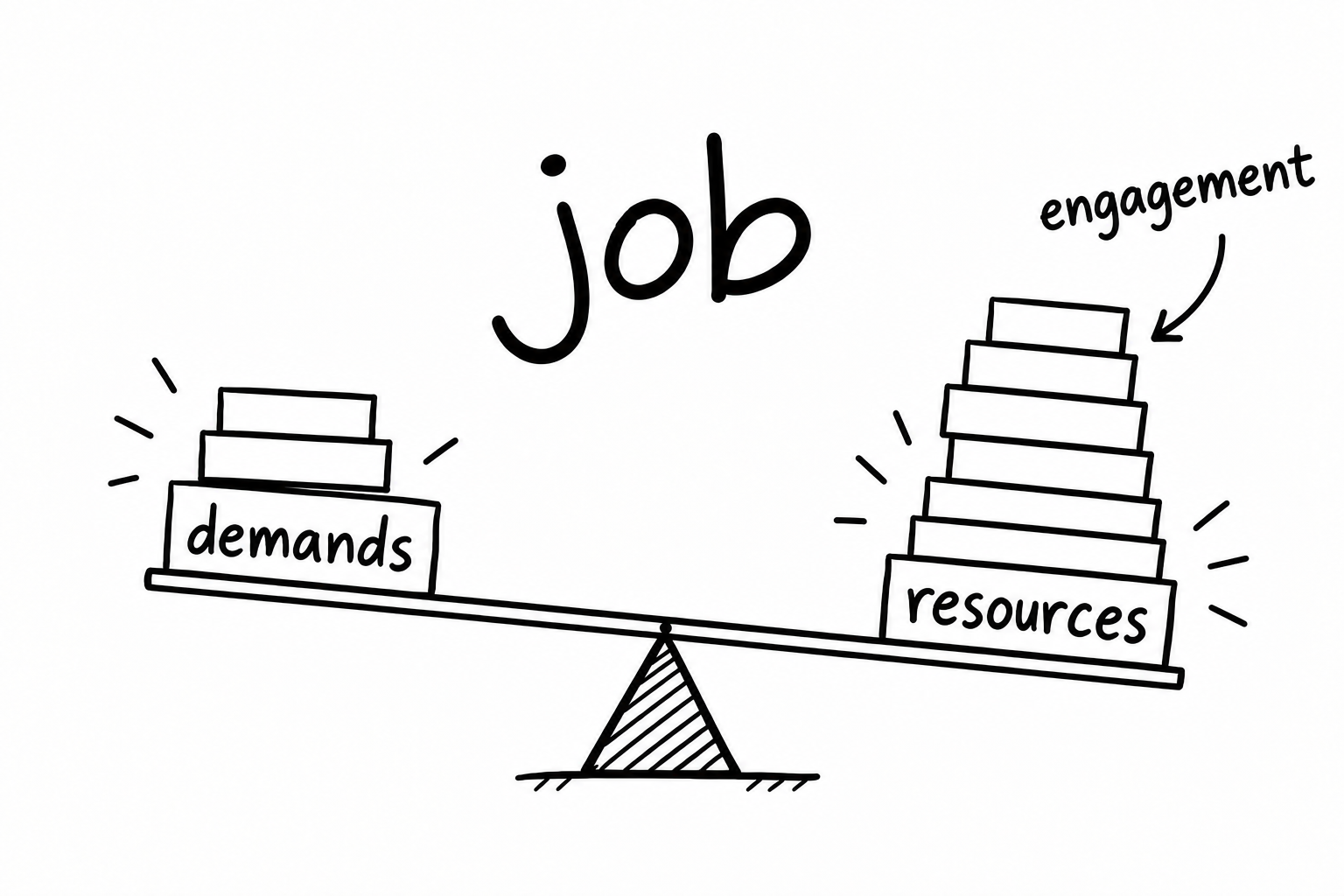
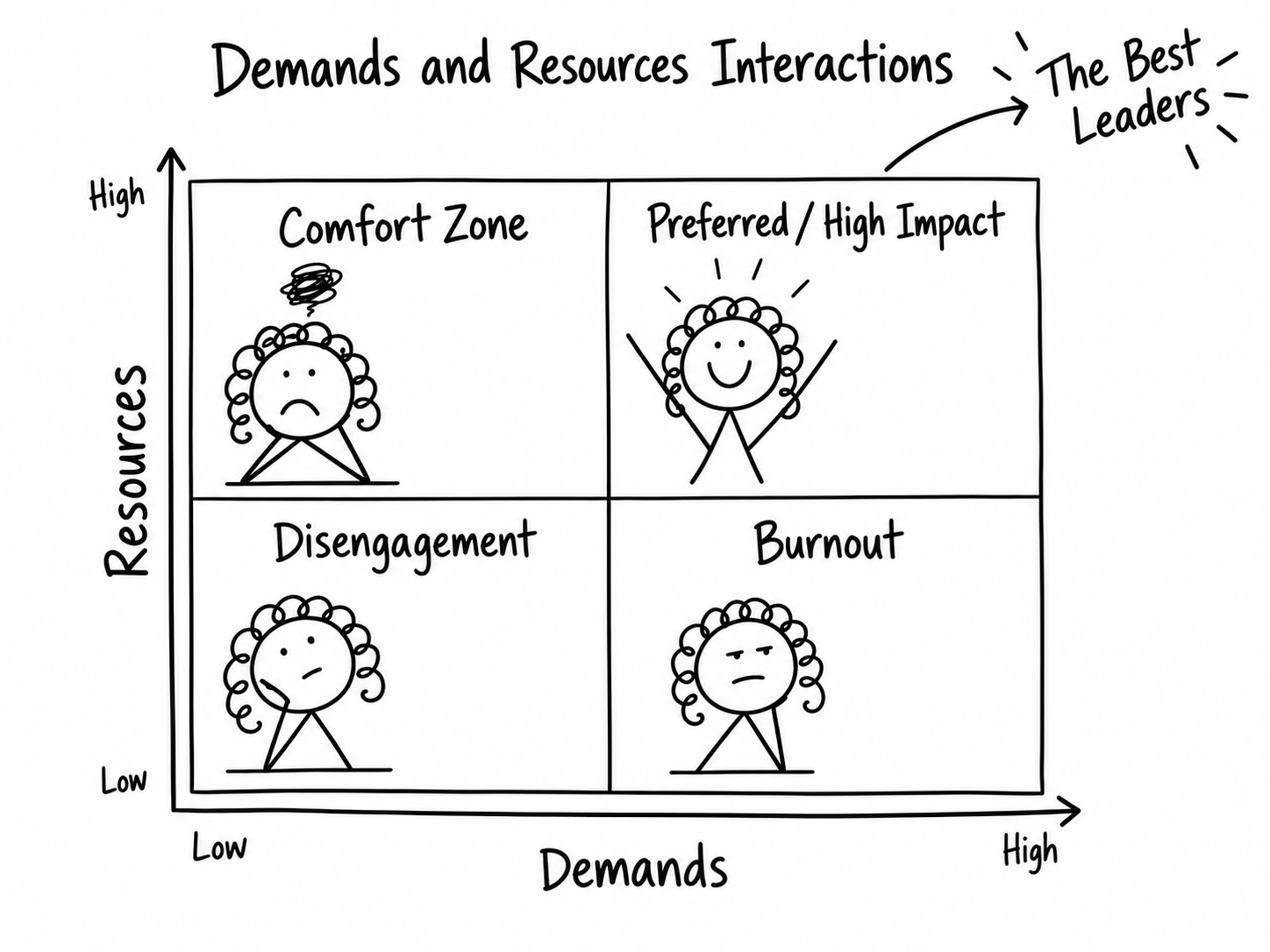
When demanding work keeps taking energy and there is too little support to recover, the risk of exhaustion and burnout rises. A different path runs through resources: useful support, freedom to make decisions, and clear feedback can help people feel more engaged in their work. These paths can happen at the same time. Adding resources not only provides a buffer for job demands. It also helps people feel more empowered at their jobs. [1, 2]
Feedback: an example of a job resource
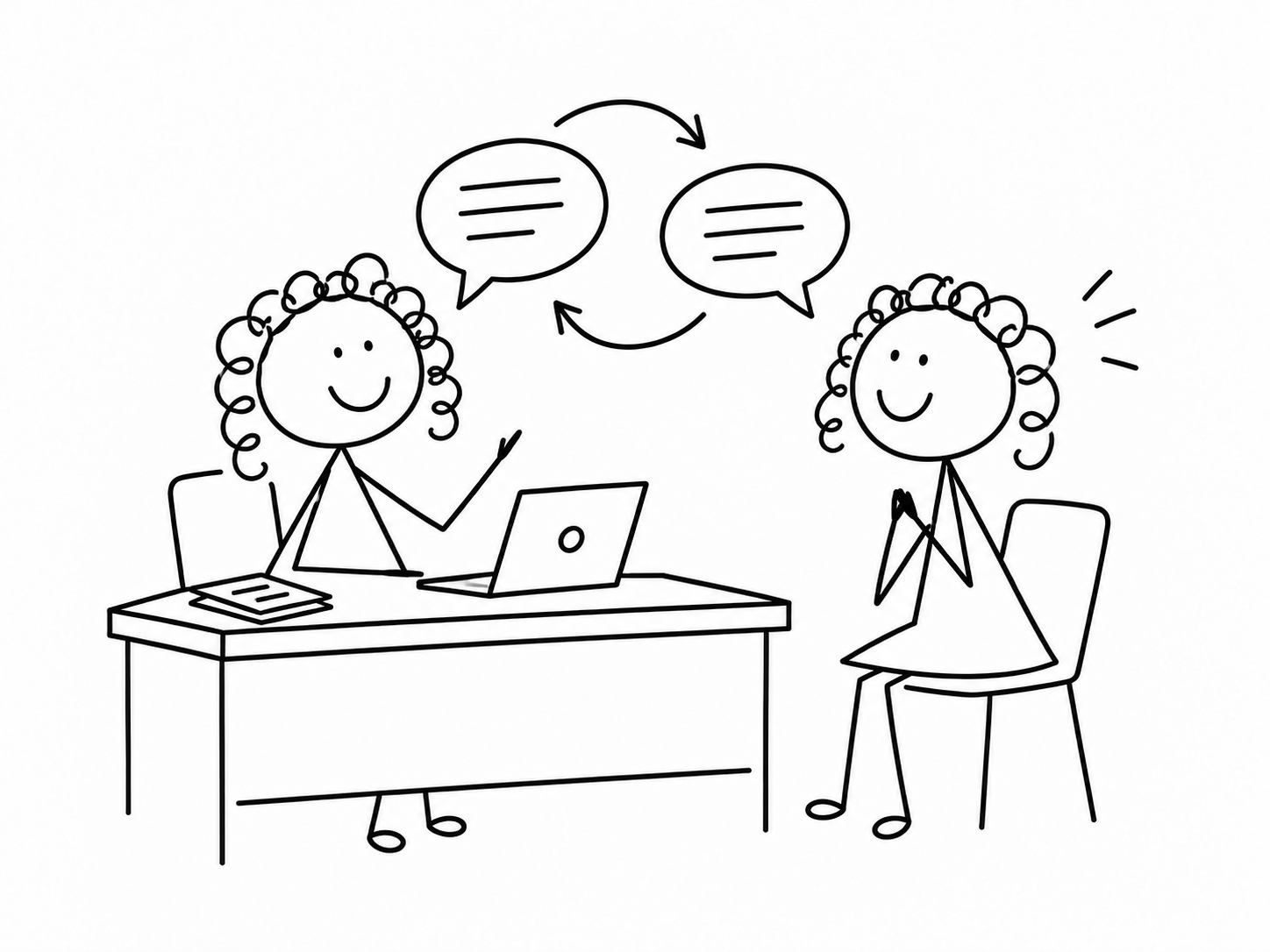
A feedback system gives people a predictable place to say what worked and what did not. A mandatory debrief held within one week of an event is an example of a feedback system. Feedback becomes a routine step that arrives while the details are fresh, so it is easier to give and receive without it feeling personal.
More support can change both outcomes
Schaufeli's 2017 review describes a practical point for leaders: resources such as social support, control over work, and feedback can both help protect against burnout and encourage engagement. That means leaders can ask two questions, not just one: “What is taking too much from our people?” and “What would help them do this work well?” [2]
Not every hard task is the same
A meaningful project can stretch you and still feel worthwhile when you have the time, authority, and help to do it. Confusing roles, repetitive red tape, or impossible deadlines are more likely to get in the way. Researchers call these challenge and hindrance demands. The distinction is useful, but it is not a rule that more pressure always creates better performance. [3]
Want a deeper look at how workplace conditions shape burnout?
Read the burnout guide or get the free Best Work Field Guide.
Speaking
Bring this conversation to your team
Beckie Irvin speaks to nonprofit and corporate audiences about the conditions that shape highly-engaged teams, organizational health, and employee retention. Tell her about your group and she will follow up.
Email Beckie about speaking →Your email app opens with the details filled in.
Sources
- Bakker, A. B., & Demerouti, E. (2007). “The Job Demands-Resources model: state of the art.” Journal of Managerial Psychology, 22, 309–328. https://doi.org/10.1108/02683940710733115
- Schaufeli, W. B. (2017). “Applying the Job Demands-Resources model.” Organizational Dynamics, 46(2), 120–132. https://doi.org/10.1016/j.orgdyn.2017.04.008
- Crawford, E. R., LePine, J. A., & Rich, B. L. (2010). “Linking job demands and resources to employee engagement and burnout: A theoretical extension and meta-analytic test.” Journal of Applied Psychology, 95, 834–848. https://doi.org/10.1037/a0019364